

CBD-Containing Topical Formulation for Localized Pain in Fibromyalgia: 12-Week Pilot Feasibil. Study
Source / Quelle: https://journals.sagepub.com/doi/10.1177/25785125261468882 Abstract Background: Fibromyalgia (FM) is a chronic pain condition characterized by widespread pain, fatigue, and functional impairment. Current pharmacological treatments show limited efficacy and poor tolerability. Cannabidiol (CBD) has demonstrated analgesic and anti-inflammatory properties, but evidence regarding CBD-containing topical formulations in FM remains scarce. Objectives: To evaluate the feasibility, safety, and preliminary efficacy of a CBD-containing topical formulation for localized pain in patients with FM and to explore its potential impact on broader symptom domains. Material and Methods: This single-arm pilot study included 30 women with FM and clinically relevant localized pain due to musculoskeletal, neuropathic, or cutaneous comorbidities. Participants self-applied a commercially available CBD-containing topical formulation to a painful area every 8 h for 12 weeks. Outcomes were assessed
12. August 2026
Effects of oral CBD supplementation on blood pressure in adults: a systematic review
Source / Quelle: https://link.springer.com/article/10.1186/s42238-026-00463-3 Abstract Background Hypertension is a leading risk factor for cardiovascular disease, particularly in ageing populations. While pharmacological interventions are common, issues with long-term adherence and side effects have prompted interest in alternative treatments. Cannabidiol (CBD), a non-psychoactive component of Cannabis sativa, has been proposed as a potential agent for blood pressure regulation due to its anxiolytic, anti-inflammatory, and vasodilatory properties. This systematic review aimed to evaluate the effects of oral CBD supplementation on blood pressure in adults with normotension and hypertension. Methods A systematic search of PubMed, Web of Science, Scopus, and Medline was conducted in September 2024. Eligible studies were randomised controlled trials (RCTs) involving oral CBD administration in normotensive or hypertensive adults, with blood pressure as an outcome. Studies involving animals
12. August 2026
Effect of cannabidiol, cannabinol and tetrahydrocannabivarin in managing inflammatory pain
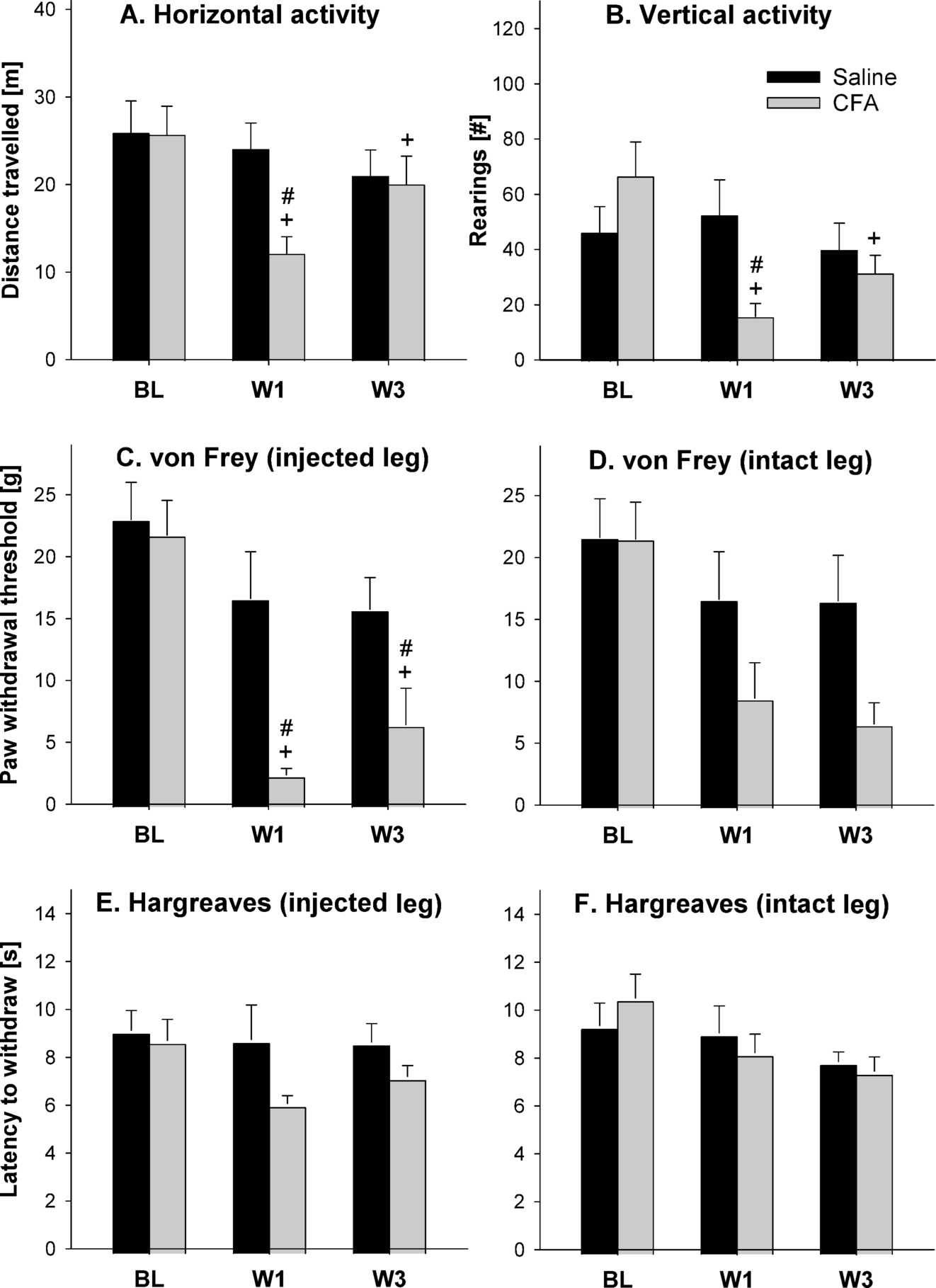
Source / Quelle: https://www.nature.com/articles/s41598-026-51275-7 Abstract Current medications used to treat the inflammatory pain either have limited effectiveness or may be associated with serious side effects. Non-psychoactive phytocannabinoids may have a better safety profile and could be used as an alternative approach to treat this condition. The aim of this study was to test the potential of three phytocannabinoids, cannabinol (CBN), tetrahydrocannabivarin (THCV) and cannabidiol (CBD), in treating inflammatory pain. The inflammatory pain was triggered in male rats by a single intra-articular knee injection of the complete Freund’s adjuvant (CFA). One week later, rats were given four daily administrations of ibuprofen, CBN, THCV or CBD. Our data demonstrated that CFA injection triggered an inflammatory response expressed as damage of the synovial tissue, reduced locomotor activity, increased mechanical and, to a lesser extent, thermal pain sensitivity, and loss of body weight.
12. August 2026
Antiproliferative Effects of Cannabinoids and Cisplatin in Cervical Cancer Cells
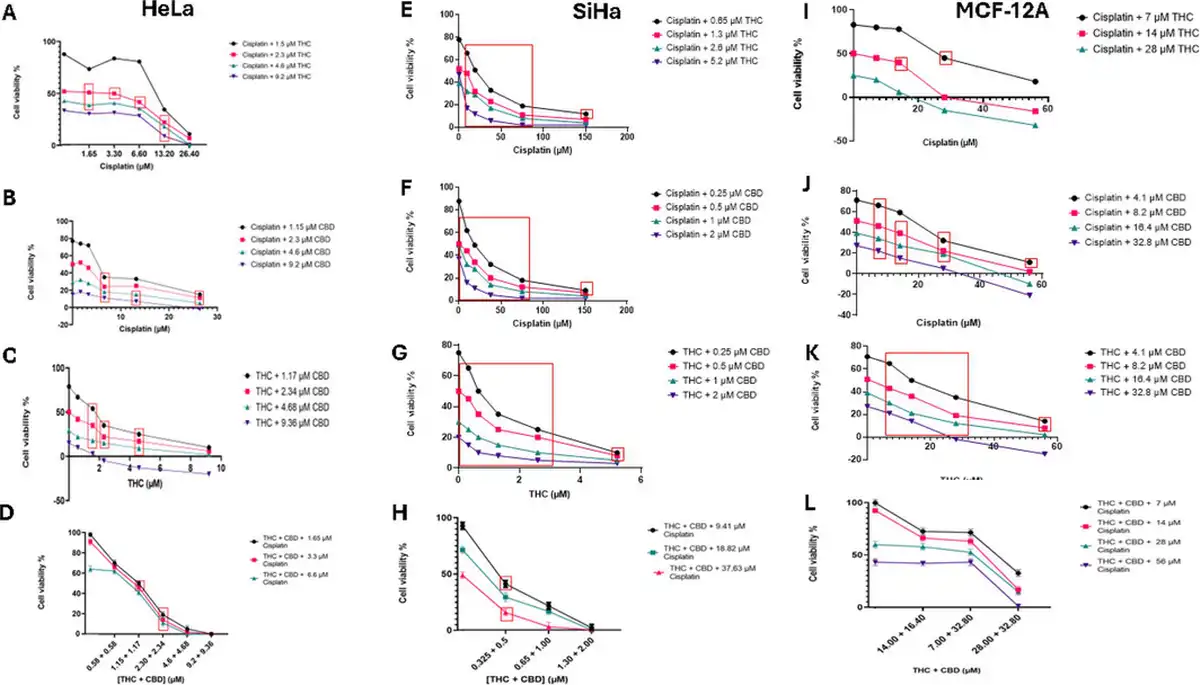
Source / Quelle: https://www.ovid.com/journals/canrep/fulltext/10.1002/cnr2.70561~antiproliferative-effects-of-cannabinoids-and-cisplatin-in Introduction Cervical cancer remains a leading cause of cancer-related mortality among women globally, particularly in low- and middle-income countries. Cisplatin, a standard chemotherapeutic agent, is limited by severe toxicities and chemoresistance. This study aimed to assess the effects of cisplatin in combination with phytocannabinoids, Δ9-tetrahydrocannabinol (THC) and cannabidiol (CBD) on cell proliferation, morphology, cell cycle progression, cell death, and DNA damage. Methods Synergistic interactions between THC, CBD, and cisplatin were assessed in HeLa, SiHa, and MCF-12A cells using the checkerboard assay and SRB assay. Cell morphology, cell cycle progression, apoptosis induction, autophagic activity, and DNA repair gene expression were evaluated using various techniques. Results The THC–CBD–cisplatin combination exhibited the strongest
12. August 2026
CBD-Induced Tumor Cell Death: Molecular Mechanisms and Translational Perspectives in Cancer Therapy
Source / Quelle: https://www.tandfonline.com/doi/full/10.2147/DDDT.S597740 Abstract Background Cannabidiol (CBD), a major non-psychoactive phytocannabinoid derived from Cannabis sativa, has attracted increasing attention as a potential anticancer agent because of its pleiotropic biological activities and favorable safety profile. However, the mechanisms by which CBD regulates tumor cell death and their therapeutic relevance remain incompletely understood. Methods and Results This review summarizes current evidence on the molecular mechanisms by which CBD regulates tumor cell death across different cancer models. Available studies indicate that CBD exerts antitumor effects through multi-target and multi-pathway mechanisms involving oxidative stress, mitochondrial dysfunction, endoplasmic reticulum stress, calcium homeostasis imbalance, and modulation of signaling networks such as PI3K/Akt/mTOR, MAPK, NF-κB, and PPARγ. Through these interconnected processes, CBD can induce apoptosis, aut
12. August 2026