

Efficacy and safety of cannabinoids in the treatment of spasticity in multiple sclerosis
Efficacy and safety of cannabinoids in the treatment of spasticity in multiple sclerosis: A systematic review of randomized clinical trials Source / Quelle: https://bpspubs.onlinelibrary.wiley.com/doi/10.1002/bcp.70719 Abstract Aims This work aimed to evaluate the efficacy and safety of cannabinoids for the treatment of MS-related spasticity. Methods Systematic searches were conducted in PubMed, EMBASE, and LILACS on 2 December 2025. Randomized controlled trials evaluating natural or synthetic cannabinoids for MS-related spasticity were included. Studies published in non-Roman characters and those assessing recreational cannabis use were excluded. Two reviewers independently performed study selection, data extraction, and risk of bias assessment using the RoB 2 tool. Qualitative synthesis, pairwise random-effects meta-analyses, and Bayesian network meta-analysis were conducted. Certainty of evidence was assessed using GRADE and CINeMA. Results Twenty-seven studies (>3000 participants)
29. September 2026
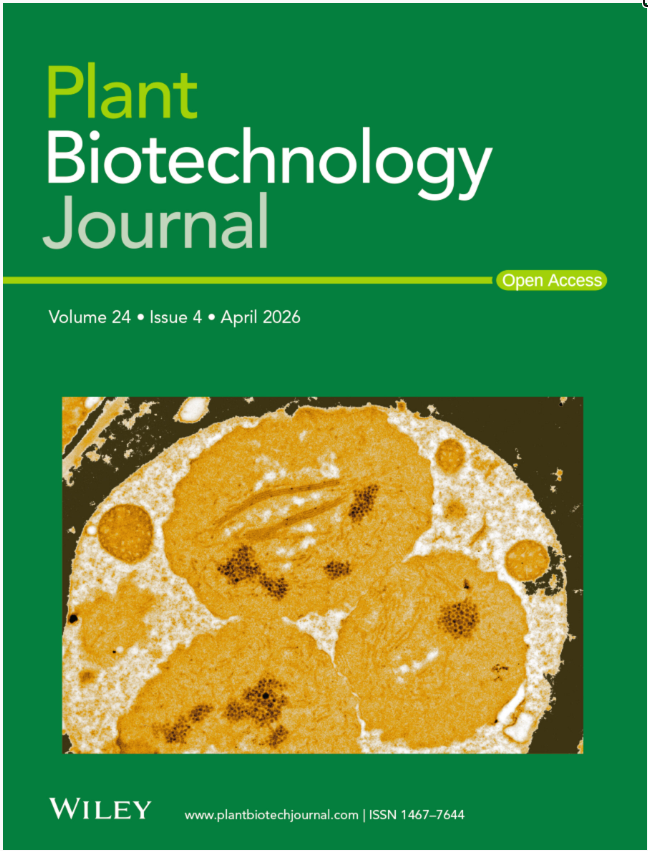
Resurrected Ancestral Cannabis Enzymes Unveil Functional Evolution of Cannabinoid Synthases
Resurrected Ancestral Cannabis Enzymes Unveil the Origin and Functional Evolution of Cannabinoid Synthases Source / Quelle: https://onlinelibrary.wiley.com/doi/10.1111/pbi.70475 ABSTRACT Cannabinoids, such as tetrahydrocannabinolic acid (THCA), cannabidiolic acid (CBDA) and cannabichromenic acid (CBCA), are bioactive and medicinally relevant compounds found in the cannabis plant (Cannabis sativa L.). These three compounds are synthesised from a single precursor, cannabigerolic acid (CBGA), through regioselective reactions catalysed by different cannabinoid oxidocyclase enzymes. Despite the importance of cannabinoid oxidocyclases for determining cannabis chemotype and properties, the functional evolution and molecular mechanism of this enzyme family remain poorly understood. To address this gap, we combined ancestral sequence reconstruction and heterologous expression to resurrect and functionally characterise three ancestral cannabinoid oxidocyclases. Results showed that the ability to
29. September 2026

Evaluation of the Antioxidant, Anti-Inflammatory, and Antimicrobial Activity of a Cannabis sativa
Evaluation of the Antioxidant, Anti-Inflammatory, and Antimicrobial Activity of a Cannabis sativa-Infused African Product Used for Wound Healing Source / Quelle: https://www.mdpi.com/1422-0067/27/15/6815 Abstract Product Shezi (PS) is a polyherbal African traditional medicine (ATM) formulated from six known South African medicinal plants and is used for treating cutaneous wounds. However, its ethnopharmacological properties have not been scientifically validated. This study aimed to evaluate the antioxidant, anti-inflammatory, and antimicrobial activities of PS in vitro. Aqueous and methanolic extracts were prepared and qualitatively screened for phytochemical constituents. Cytotoxicity in fibroblasts and macrophages was assessed using an ATP-based viability assay. Antioxidant activity was evaluated using the 2,2-diphenyl-1-picrylhydrazyl (DPPH) radical scavenging and a hydrogen peroxide (H2O2)-induced oxidative stress model. Anti-inflammatory effects in lipopolysaccharide (LPS)-stimul
23. September 2026
Efficacy of Cannabidiol in Reducing Virulence of Listeria monocytogenes
Source / Quelle: https://www.mdpi.com/1422-0067/27/6/2682 Abstract Listeria monocytogenes (LM) is a major foodborne pathogen causing illnesses ranging from gastroenteritis to severe systemic infections. The key virulence factors include bacterial motility, hemolysin and lecithinase production, and invasion of host tissues. This study investigated the anti-virulence effects of cannabidiol (CBD), the main non-psychoactive compound in Cannabis sativa, against LM. The minimum inhibitory concentration (MIC, 2289 μM; 719.8 µg/mL) and sub-inhibitory concentration (SIC, 11.92 μM; 3.75 µg/mL) of CBD were determined for LM strains Scott A and ATCC 19115. Cultures were treated with SIC, 6× SIC, 1/4× MIC, and MIC to assess effects on motility, hemolysin and lecithinase production, and adhesion and invasion of human intestinal (Caco-2) and brain endothelial (HBMEC) cells, alongside virulence gene expression by RT-qPCR. Cannabidiol’s efficacy was also determined using a Galleria mellonella larval in
17. September 2026
Cannabinoids and cognition in Parkinson’s disease: Insights from animal models and emerging evidence
Cannabinoids and cognition in Parkinson’s disease: Insights from animal models and emerging clinical evidence Source / Quelle: https://www.sciencedirect.com/science/article/abs/pii/S0306452226001971 Abstract Parkinson’s disease (PD) is a progressive, multisystem neurodegenerative disorder characterized not only by motor impairments but also by a broad spectrum of debilitating non-motor symptoms, including cognitive decline. The cognitive function depends on neuronal plasticity, which is tightly regulated by multiple signaling systems, among which the endocannabinoid system (ECS) plays a significant role. Over the past three decades, substantial evidence has accumulated regarding how endogenous cannabinoids, plant-derived cannabinoids, and pharmacological modulators of ECS signaling influence synaptic plasticity, neuronal excitability, and neuroinflammation — processes that are critical in PD pathophysiology. This narrative review synthesizes experimental and clinical evidence on the ef
17. September 2026

Preclinical antitumor evaluation of a tetrahydrocannabinol and cannabidiol (1:6) cannabis extract
Preclinical antitumor evaluation of a tetrahydrocannabinol and cannabidiol (1:6) cannabis extract in an MCF-7 xenograft model of estrogen receptor-positive breast cancer Source / Quelle: https://veterinaryworld.org/Vol.19/June-2026/17.php ABSTRACT Background and Aim: Breast cancer remains one of the leading causes of cancer-related mortality worldwide, despite advances in surgery, chemotherapy, endocrine therapy, and targeted treatments. Cannabinoids derived from Cannabis sativa, particularly tetrahydrocannabinol (THC) and cannabidiol (CBD), have demonstrated anticancer properties in several experimental models; however, in vivo evidence in estrogen receptor (ER)-positive breast cancer remains limited. This study aimed to evaluate the antitumor effects of a THC:CBD (1:6) cannabis extract in a Michigan Cancer Foundation-7 breast cancer cell line (MCF-7) xenograft mouse model of ER-positive breast cancer. Materials and Methods: Female BALB/c nude mice bearing MCF-7 xenograft tumors were
7. September 2026