

Phytocannabinoids as anti-inflammatory agents: Synergistic effects when combined with Cannabis sativa L. matrices
Source / Quelle: https://www.sciencedirect.com/science/article/pii/S0378874125018276?via%3Dihub

Abstract
Ethnopharmacological relevance
Cannabis sativa L. has a long history of traditional use for the treatment of pain and inflammatory disorders in both Asian and European medical systems, which supports its investigation as a source of bioactive compounds with potential relevance for chronic immune-mediated diseases.
Aim of the study
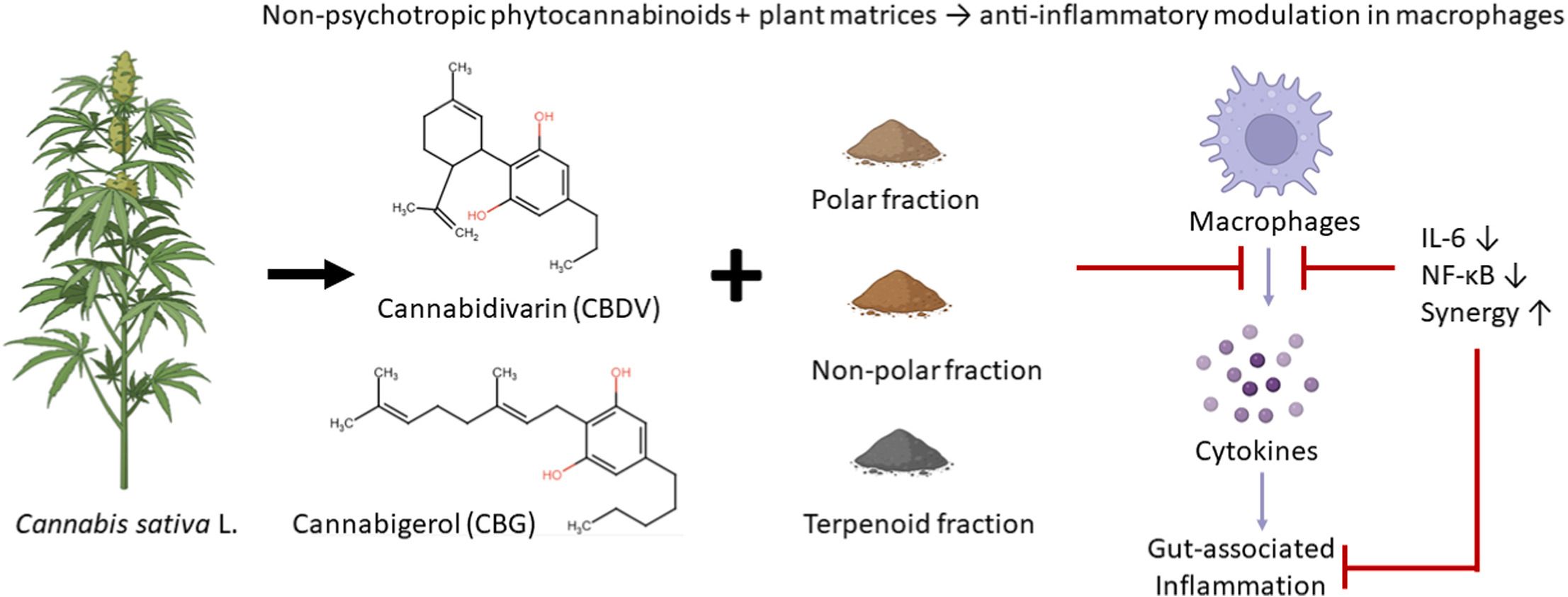
This study evaluated the ten major non-psychotropic phytocannabinoids for their anti-inflammatory and antioxidant activities, and for synergistic interactions with non-cannabinoid matrices derived from the same plant (polar, non-polar and terpenoid).
Material and methods
Anti-inflammatory effects were assessed in macrophage-differentiated THP-1 cells by measuring pro-inflammatory cytokine production (ELISA) and nuclear factor kappa B (NF-κB) pathway activation (luciferase reporter assay).
Results
All tested phytocannabinoids demonstrated anti-inflammatory effects, in particular, cannabidivarin (CBDV) reduced IL-6, TNF-α production and also inhibited NF-κB activation. Several phytocannabinoids, especially their acidic forms, exhibited high oxygen radical absorption capacity (ORAC), but none showed significant cellular antioxidant activity (CAA), possibly due to limited bioavailability. Importantly, several phytocannabinoid-matrix mixtures displayed synergistic anti-inflammatory effects, with combinations containing cannabigerol (CBG) or cannabinol (CBN) being particularly potent.
Conclusion
These findings highlight the potential of lesser-known phytocannabinoids, especially in combination with specific C. sativa L. matrix components, to modulate inflammatory pathway supporting their development as functional ingredients for managing chronic gut-associated inflammation.
[...]